Neo4j is a leading graph database platform that enables organizations to uncover hidden relationships within connected data. Built with a native graph architecture, Neo4j helps enterprises accelerate data-driven decision-making across fraud detection, knowledge graphs, customer 360, recommendation engines, supply chain optimization, and network analysis.
 

Market Leadership:

Neo4j continues to be recognized as a leader in the graph database market through strong product innovation and customer adoption.

  • Leader in the 2025 Gartner® Magic Quadrant™ for Cloud Database Management Systems (Graph Category)
  • Gartner Peer Insights™ Customers’ Choice for Graph Databases
  • Forrester Wave™ Leader in Enterprise Graph Data Platforms


Build on a reliable foundation.

Product Highlights:

Neo4j Database: Enterprise-native graph database for managing highly connected data.

Key Features:

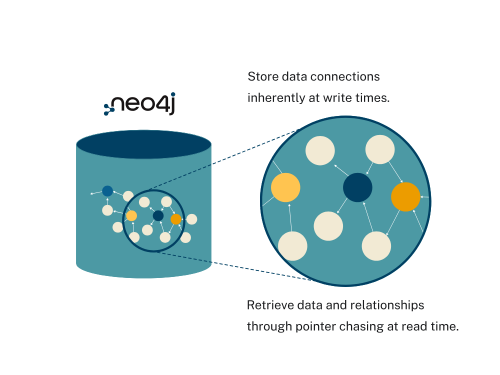
  • Native graph architecture optimized for relationship-intensive workloads.
  • ACID-compliant transactions for enterprise-grade reliability.
  • High availability and clustering for mission-critical deployments.
  • Flexible Cypher query language for intuitive graph exploration.
  • Scalable performance supporting billions of nodes and relationships.

Neo4j Aura: Fully managed cloud graph database service.

Key Features:

  • Fully managed Database-as-a-Service (DBaaS).
  • Available across AWS, Microsoft Azure, and Google Cloud.
  • Automatic backup, scaling, and maintenance.
  • Enterprise-grade security and compliance.
  • Rapid deployment without infrastructure management.

Neo4j Bloom: Interactive graph visualization and exploration tool.

Key Features:
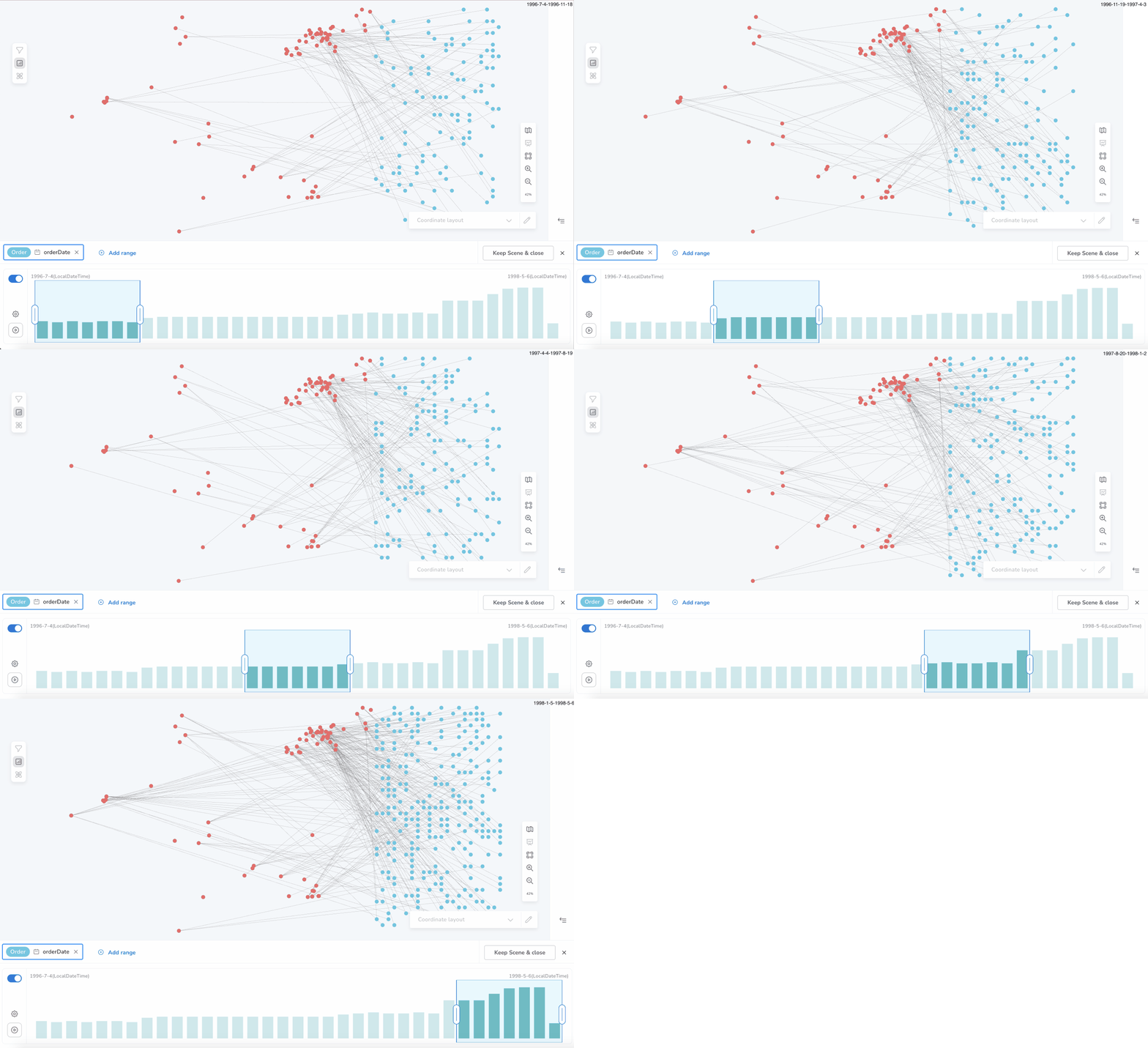
  • No-code graph visualization for business users.
  • Natural language search capabilities.
  • Interactive exploration of complex relationships.
  • Custom perspectives for different business scenarios.
  • Simplifies collaboration between technical and non-technical teams.

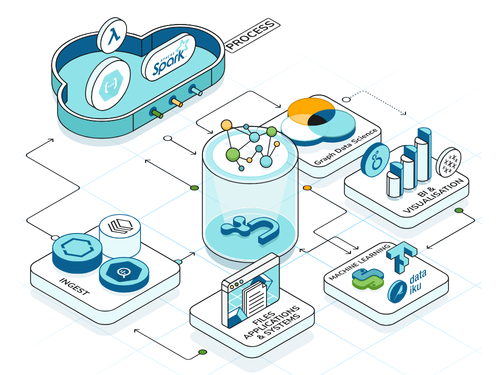
Neo4j Graph Data Science (GDS): Advanced analytics and machine learning for connected data.

Key Features:
  • Comprehensive graph algorithms library.
  • Community detection and centrality analysis.
  • Link prediction and recommendation models.
  • Fraud detection and anomaly identification.
  • Machine learning pipelines for predictive analytics.

Common Use Cases:

Integrate structured and unstructured data to create intelligent knowledge graphs that improve information discovery and AI applications.

Identify suspicious relationships, hidden fraud rings, and anomalous transaction patterns in real time.

Deliver personalized product, content, and service recommendations by analyzing customer behavior and relationship networks.

Create unified customer profiles by connecting data across multiple systems for improved customer engagement.

Visualize supplier networks and dependencies to improve operational resilience and identify potential risks.

Analyze infrastructure relationships, application dependencies, and network topology to improve system reliability.